Tel: +33768734502| Email : sales@davidjbanks.co.uk

Hydraulic Systems, Steering & Deck Machinery
Project Manager control of yacht hydraulic systems, actuators, pipework, controls, deck machinery, testing, commissioning and refit integration.
OVERVIEW
Hydraulic systems onboard yachts support a wide range of operational and safety-critical functions, including passerelles, shell doors, swim platforms, balconies, cranes, davits, capstans, light masts, telescopic mast systems, steering-related equipment and other powered mechanisms.
The Project Manager is not expected to replace the hydraulic specialist, automation engineer or commissioning technician. However, the PM must understand the system scope, operational logic, access constraints, safety precautions, testing requirements and coordination needs associated with hydraulic installations and refit works.
The objective of this module is to help the Project Manager recognise the information required before work begins, understand common hydraulic risks, and coordinate repairs, upgrades, removal, reinstallation, testing and commissioning in a controlled and documented manner.
KEY RESPONSIBILITIES
- Confirm the hydraulic scope and identify all affected equipment.
- Review hydraulic schematics, control philosophy and equipment documentation.
- Verify the condition of hoses, rigid pipework, fittings, manifolds, valves and actuators.
- Confirm isolation, depressurisation and lock-out arrangements before intervention.
- Assess leakage, contamination, hose chafe, corrosion and inadequate support arrangements.
- Review cylinder condition, actuator travel, end-of-travel limitations and feedback devices.
- Confirm emergency operation modes, local controls and alarm indications.
- Ensure replacement parts, seals, hoses and fittings are correctly specified.
- Verify flushing, cleanliness control and fluid compatibility where required.
- Confirm pressure testing, functional testing and reinstatement procedures.
- Coordinate lifting and handling arrangements for heavy hydraulic components.
- Record defects, test results, corrective actions and close-out status.
TYPICAL HYDRAULIC EQUIPMENT & SYSTEMS
• Hydraulic power packs and reservoirs
• Hydraulic manifolds and distribution blocks
• Rigid pipework and flexible hose assemblies
• Single-acting and double-acting hydraulic cylinders
• Telescopic hydraulic cylinders
• Rotary actuators
• Control valves and solenoid valves
• Counterbalance and non-return valves
• Safety / load-holding valves
• Accumulators and pulsation suppressors
• Rotary joints
• Position sensors and feedback devices
• Local control panels and emergency controls
• Electrical / hydraulic interfaces and HMI controls
• Passerelles and boarding ladders
• Shell doors and hatches
• Swim platforms and balconies
• Steering-related hydraulic systems
• Stabiliser actuation equipment
• Capstans and deck machinery
• Cranes and rescue davits
• Light masts and telescopic mast systems
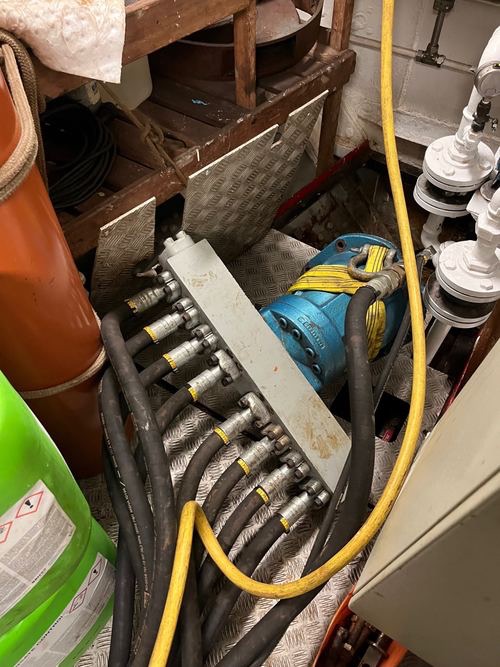
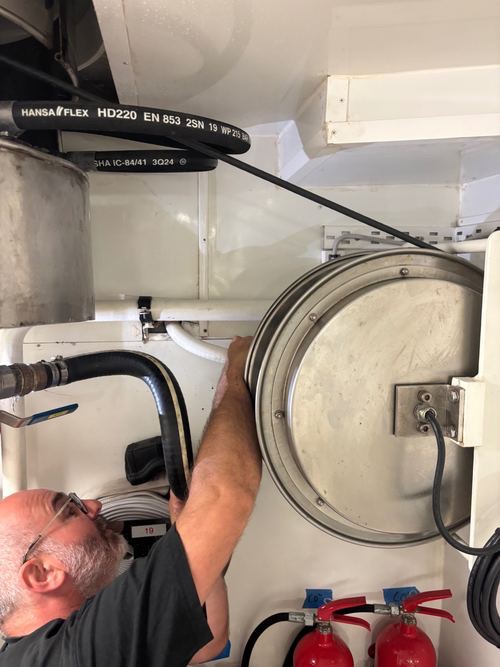
Azipod hydraulic manifold and hose distribution assembly during onboard inspection.
GENERAL REMOVAL & REINSTALLATION CONTROLS
Heavy hydraulic components, cylinders, mast sections and associated machinery may require controlled removal and reinstallation during refit works.
The Project Manager should confirm:
• system isolation and depressurisation before disconnection
• component weight and centre of gravity
• approved lifting points
• suitable crane, hoist or lifting equipment
• sling arrangement and safe working load
• temporary supports where required
• protection of surrounding structure and finished surfaces
• hose and electrical connections clearly identified before removal
• correct orientation and alignment during reinstallation
• pressure, leak and functional testing following reinstatement
TELESCOPIC NAVIGATION MAST — REMOVAL, LIFTING & REINSTALLATION
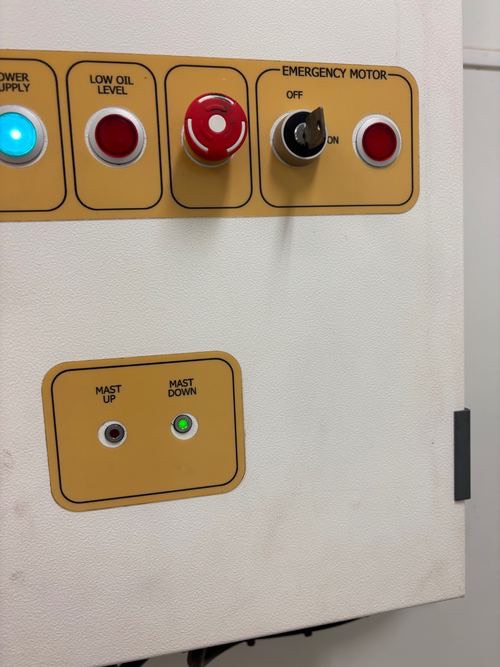
This example shows the controlled removal of a telescopic navigation mast incorporating hydraulic actuation, electrical control and position-feedback systems. The work required coordination between hydraulic, electrical, lifting and access activities before the mast could be removed safely from the vessel.
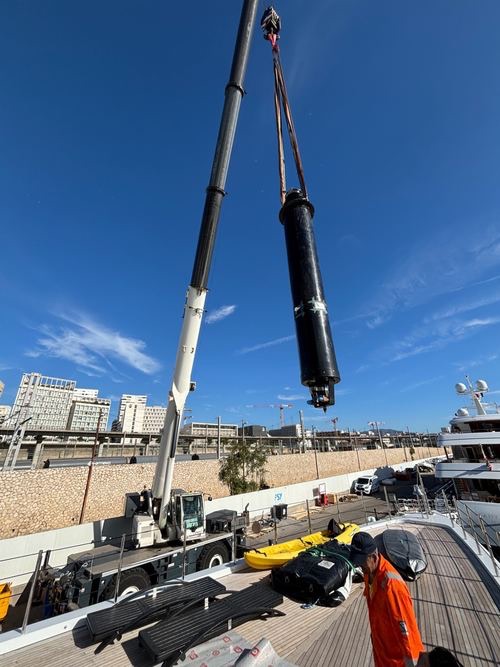
Crane removal of the telescopic mast during refit
Local control panel showing mast up/down functions and emergency motor controls
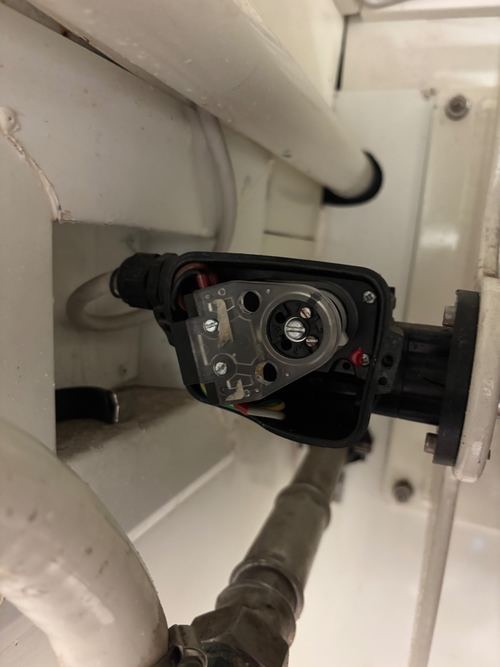
Position / feedback device associated with mast travel and position control
Access to the mast installation during disconnection and preparation for removal
HYDRAULIC TESTING & COMMISSIONING
Following repair, replacement, overhaul or modification, the hydraulic system must be tested in a controlled sequence before final acceptance.
The Project Manager should confirm:
• the system has been correctly reassembled and all temporary protections removed
• hydraulic fluid level and specification are correct
• the system has been flushed where required
• filters and cleanliness requirements have been addressed
• hoses, rigid pipework and fittings are correctly supported and secured
• accumulators have been charged to the required pressure where applicable
• relief-valve and pressure settings are confirmed
• all isolation points have been returned to the correct operating condition
• leak testing has been completed at low pressure before progressing to working pressure
• pressure testing is carried out to the approved procedure where required
• cylinders and actuators operate through their complete travel without binding or abnormal movement
• control valves and solenoid valves function correctly
• position sensors and feedback devices correspond with actual equipment movement
• local controls, emergency stops and manual overrides are tested
• HMI indications, alarms and interlocks are verified where fitted
• abnormal noise, vibration, heat generation or pressure fluctuation is investigated
• final functional testing is witnessed and recorded
• test sheets, pressure records and commissioning results are retained within the project documentation
Commissioning principle
A hydraulic system should not be considered complete simply because the components have been installed. Final acceptance requires evidence that the complete hydraulic, electrical and control system operates safely and correctly under its intended operating conditions.
PROJECT MANAGER COMPETENCY TEST
Scenario 1 — Hydraulic System Cleanliness
A section of hydraulic pipework has been replaced following contamination and leakage. The subcontractor wants to recommission the system immediately, but no flushing record or cleanliness confirmation has been provided.
Question:
What should the Project Manager do?
A. Allow commissioning because the pipework is new
B. Run the system at full pressure to flush the contamination naturally
C. Confirm flushing, filtration and cleanliness requirements before commissioning
D. Ask the crew to monitor the system after departure
Reveal answer & rationale
Correct answer: C
Why:
Hydraulic contamination can damage valves, pumps, actuators and control components. The Project Manager should confirm that the required flushing, filtration and cleanliness criteria have been achieved before the system is returned to service.
Scenario 2 — Hydraulic Cylinder Overhaul
A hydraulic cylinder controlling a yacht access system has been removed and rebuilt in the workshop. New seals have been installed, but no bench pressure-test record has been provided before the cylinder is returned onboard.
Question:
What should the Project Manager require?
A. Reinstall the cylinder because the seals are new
B. Reinstall it and test only after the yacht leaves the yard
C. Obtain evidence of appropriate workshop testing before final acceptance and installation
D. Accept verbal confirmation from the technician
Reveal answer & rationale
Correct answer: C
Why:
A rebuilt hydraulic cylinder should be supported by appropriate testing and technical records. Testing before installation helps identify leakage, seal failure or other defects before the component is returned to operational service.
Scenario 3 — Replacement Hydraulic Hose
During inspection, a flexible hydraulic hose is found to be damaged. A replacement hose of similar diameter is available, but its pressure rating and fitting specification have not been verified.
Question:
What is the correct action?
A. Fit the hose because the diameter is approximately correct
B. Fit it temporarily and replace it during the next refit
C. Confirm pressure rating, fitting type, fluid compatibility and application before installation
D. Reduce system pressure and use the available hose
Reveal answer & rationale
Correct answer: C
Why:
Hydraulic hoses must be selected for their actual duty. Pressure rating, end fittings, fluid compatibility, routing conditions and environmental exposure must be confirmed. Visual similarity alone is not an acceptable basis for replacement.
Scenario 4 — Telescopic Navigation Mast
Following reinstallation of a telescopic navigation mast, the hydraulic system operates the mast, but the position indication does not correspond correctly with the actual mast movement and the local control panel shows inconsistent feedback.
Question:
What should the Project Manager do before accepting the system?
A. Accept it because the mast moves correctly
B. Re-label the control panel to match the indicated position
C. Stop final acceptance and verify the position sensor, control logic, electrical interface and full travel operation
D. Ask the crew to operate the mast manually
Reveal answer & rationale
Correct answer: C
Why:
A modern hydraulic installation may depend on hydraulic, electrical and control systems operating together. Incorrect position feedback can create an operational or safety risk. The complete system must therefore be tested and the indication must correspond with the actual equipment position before acceptance.
MODULE COMPLETION
Before completing this module, the Project Manager should be able to:
- Identify the principal components of a yacht hydraulic system
- Understand the function of hydraulic power packs, manifolds, valves, hoses, cylinders and actuators
- Recognise typical applications of hydraulics onboard a yacht
- Review hydraulic schematics and relevant technical documentation
- Identify leakage, contamination, hose damage, corrosion and inadequate support arrangements
- Confirm safe isolation, depressurisation and stored-energy controls before intervention
- Verify hose, fitting, seal and component specifications before replacement
- Understand the importance of hydraulic fluid cleanliness, filtration and flushing
- Coordinate cylinder removal, workshop overhaul, testing and reinstallation
- Plan the safe lifting and handling of heavy hydraulic components
- Understand the interface between hydraulic, electrical and automation systems
- Verify position sensors, feedback devices, alarms and control-panel functions
- Confirm pressure testing, leak testing and functional testing after repairs
- Coordinate commissioning through the complete operating range
- Record defects, test results, corrective actions and final close-out documentation